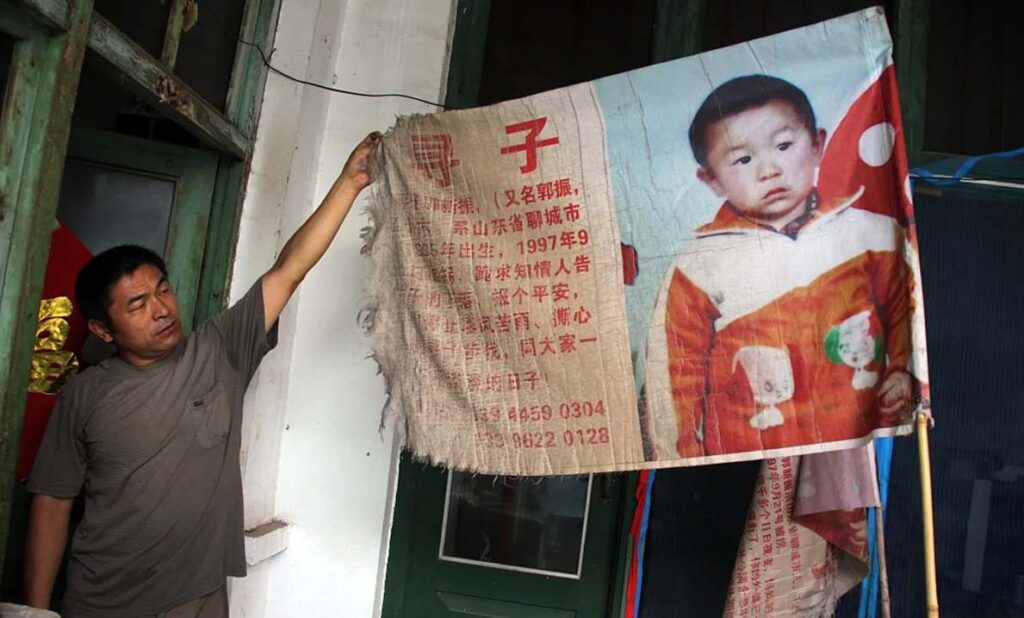

In India, we continuously advocate for implementing the one-child policy like in China. But can democratic India impose strictness like China on its people? The answer is probably not.
Everyone knows that due to China’s one-child policy, the average age of elderly people in China is higher today. This is a terrible future crisis for any country, but more than this, this policy has many social consequences.
In China, the “one family, one child” policy was implemented throughout the country in the 1980s. There is a huge shortage of children in China due to the one-child policy. Some people who were childless, or those women or families where the woman could not get pregnant, felt a strong desire to have a child. This desire transformed into demand and supply among people. This encouraged the theft of children.
People started thinking, What should they do? In this case, some people decided that injustice was being done to them. This injustice can be corrected by stealing the child. This created a market where anyone could order a baby. What gender do you want—boy or girl, approximately what age? And it’s better to come from a family that doesn’t drink, has healthy parents, so you can be strong, etc.. And it grew to such an extent that many organized child theft groups were formed that started acting like a mafia.

Children were kidnapped; in this case, the boys were more valuable; they were sold for 15 thousand dollars. Girls were also bought, but many older girls were sold into underground brothels. Human trafficking was encouraged, making leashes, harnesses, and even handcuffs for children more popular in China than in other countries!


They are tied to the parent’s hand by a harness. All so that in a close crowd or while crossing the street, they are not immediately grabbed and pushed into the back of a truck without a licence plate.
The theft plan was working perfectly. China has more cameras per capita than any other country in the world. Videos of the snatching of children in broad daylight from these public rooms started appearing on the internet, which are still prevalent even today.
Arrangements were made in schools to prevent child theft. But it was extremely difficult to find the stolen child. Often, it would be discovered much later that many of their children had been stolen, and the resold children had already grown up in new families. And he was loved there too.
A generation of stolen children has grown up in China
Some people don’t even realise that they were stolen from as children. Childhood memories usually become blurry; memories take the place of facts. DNA testing was not very common back then, so it is difficult to prove that your parents are not yours.


And now that DNA has become available, a wave of adult children has begun in China. Many mothers did not give up, and after 20 years of searching, they took part in TV shows to publicise the problem and created the volunteer organisation “Find It.” And now, twenty to thirty years later, young people, mostly boys, find a second family—their biological parents.


But is it possible to stop loving the “fake” people who raised him? But during this time, there has been a lot of injustice since childhood.
Subscribe us !
Topicflix is the share platform of your article and experiences. Find us more !


Do you know Belinda Bencic: Charming Swiss tennis player [pics]
Belinda Bencicise a charming and talented Swiss tennis player. She played her first professional tournament…

Who is Shubhangi Atre ?
Indian television actor Shubhangi Atre is famous for her roles in Hindi TV series. She…

Real Madrid’s Frustration as Nico Paz Shines Despite Spain’s Neglect
Real Madrid is dissatisfied with Spain’s treatment of Nico Paz, a dual-nationality player, preferring him…

Why Sharks will Attack Humans If They Get Too Close ?
Despite their enormous size and fearsome jaws, sharks are naturally quite cautious animals. They may…

Amazing Cosplay on Mileena from Mortal Kombat
The fighting game and movie franchise Mortal Kombat features a character named Mileena. She is…
Why Indian Movies Always Have Songs ?
The reason for songs in Indian films is that most of the films have love…